


Materials and hair
Remy vs Virgin hair: differences, origin and quality
Understand what each term describes and which questions to ask about processing and provenance.
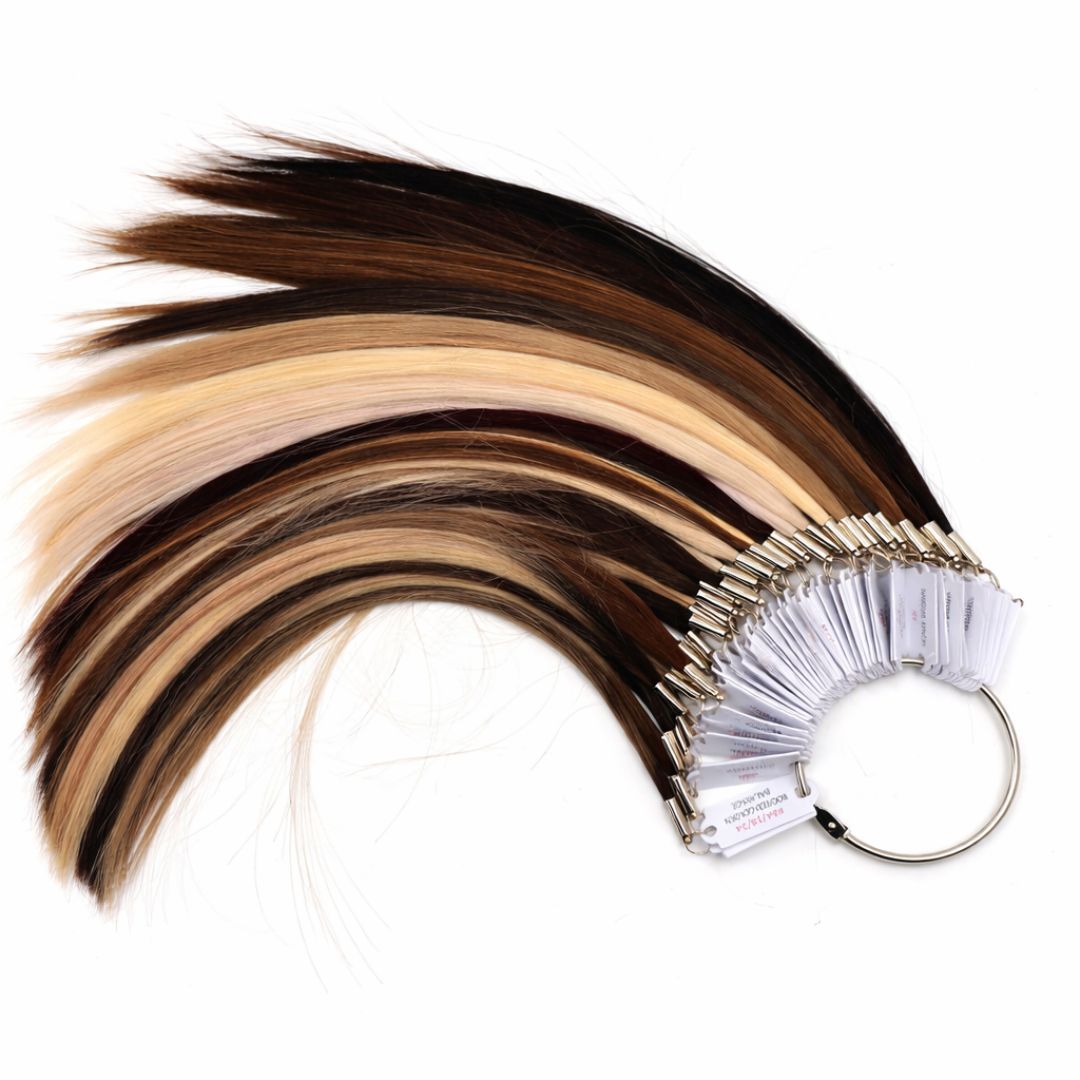
Remy and Virgin are not synonyms, and neither names a country. Remy concerns cuticle alignment along the hair. Virgin is commonly used commercially for hair that has not undergone chemical treatment altering its colour or structure. These descriptions can overlap, but must refer to the material actually supplied.
What Remy means
The cuticle is the hair's outer layer of small scales. Remy hair is kept aligned in the same root-to-tip direction. The term does not mean the hair has never been coloured, lightened or otherwise processed.
Ask whether the description refers to retained, aligned cuticles and which treatments have been applied. The word Remy alone does not measure the condition of the lengths, identify a country or guarantee a lifespan.
What Virgin means
Virgin describes hair that has not been chemically processed before the stage being described. Clarify whether the claim refers to the original raw material or the hair in the finished system.
If virgin raw hair was subsequently bleached, dyed or chemically reshaped, the final processing still matters. Ask for explicit confirmation of the supplied colour and texture, particularly for very light shades or special requests.
Three separate pieces of information
| Term | What it describes | What it does not prove |
|---|---|---|
| Remy | Consistent root-to-tip orientation and cuticles | Untreated hair or European origin |
| Virgin | The declared processing history of the hair | Collection country or quality of the whole base |
| Geographic origin | The declared source of the hair | Where the hair system was assembled |
Processing and actual condition
Colour, wave and finish can involve different processes. Treated hair is not automatically unsuitable. What matters is that the characteristics are stated and fit the result you want.
Assess consistency, manageability and the condition of the lengths rather than judging only the shine in a photograph. Finishing products can affect the initial appearance. Ongoing care also influences performance; a commercial label is not a promise of low maintenance.
Do not assume a system can be bleached or chemically changed simply because it contains human hair. Check processing history and compatibility with the base and attachment construction before any treatment.
Hair origin and manufacturing location
A system made in China does not necessarily contain Chinese hair. The country where the base is made or the system assembled is different from the source of the raw hair.
CrownHair develops dedicated production through specialist facilities in China and offers different hair types according to availability and configuration. A specific origin must be confirmed for the selected product, not extended to the entire range from a single model's description.
Read about our production approach and Italian support on the About us page.
Choose beyond the label
- Result: which colour, texture and length do you need?
- Processing: has the hair been coloured, lightened or chemically reshaped?
- Origin: does the declaration cover this configuration or only a product line?
- Care: which products and routines are compatible?
- Customisation: which alternatives can achieve the intended result?
Use the colour guide to compare shades. For requirements beyond the catalogue, explore custom hair systems.
Common questions
Does Remy mean European?
No. Alignment and provenance describe different things. European origin needs a specific product declaration.
Is Virgin always better?
It is not a universal ranking. Consider your intended result, necessary processing, material condition and care routine.
Can I identify either from a photo?
A photograph helps assess colour and appearance, but cannot certify cuticles, treatments or origin. Product information remains essential.
Information about choosing and caring for hair systems. Contact CrownHair support for advice on your individual configuration.